Cambodia Requests Interpol Red Notices as Online Fraud Cases Advance Through Courts
Cambodia has requested Interpol Red Notices for two alleged scam ringleaders as court cases linked to raids on major fraud compounds advance, with authorities highlighting expanded cooperation with international partners.
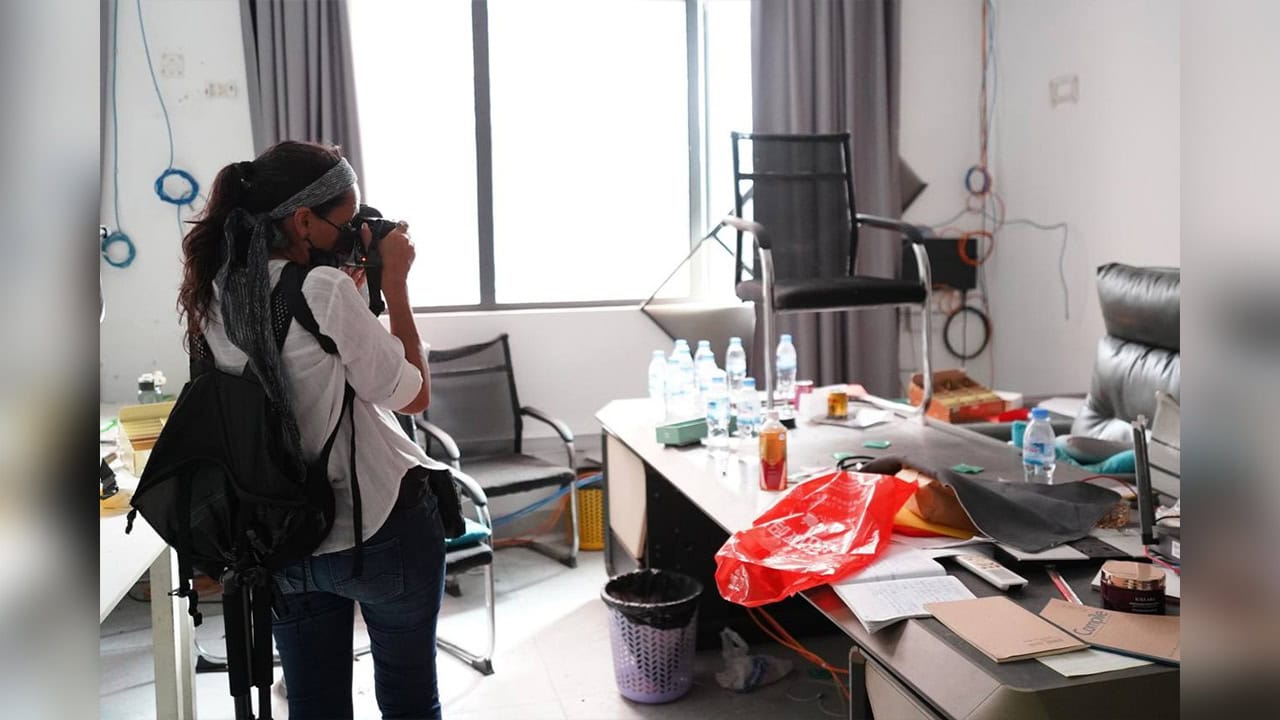
Cambodia has asked Interpol to issue Red Notices for two alleged ringleaders of online scam networks, as prosecutions linked to raids on several large compounds continue and authorities expand cooperation with international law enforcement partners.
The developments were presented during a two-day press tour that ended on September 22 at the Phnom Penh Municipal Police headquarters, after visits to shuttered scam sites in Kandal, Svay Rieng and Prey Veng provinces.
Media Tour Showcases Crackdown
The tour brought together 75 journalists from 42 local and foreign news organizations, including 23 international outlets, according to Ministry of Information spokesperson Tep Asnarith, who headed the delegation.
Participants were given direct access to the raided locations and to officials leading the campaign against technology-driven fraud, he said.
"Journalists were able to gather information and document the government's efforts to tackle technology-based scams, and the tangible outcomes achieved," Asnarith said.
Arrest Warrants for Kandal Compound
According to a fact sheet shared during the tour, a court has issued arrest warrants for Qiu Ren Wu and John Riskin in connection with the Jin Zi Hui Property Management complex in Kandal province. Qiu Ren Wu is listed as the registered owner of the site, while John Riskin is described as his representative.
Authorities have requested Interpol Red Notices for both men.
The document stated that the owners and staff had abandoned the compound before inspectors arrived. The entire site in Prek Sueng village, Sampov Poun town, has now been sealed off.
The complex comprised 55 buildings, 113 villas and 4,707 rooms. Investigators confiscated 3,779 computers, 11,585 mobile phones, 56 central processing units, 35 servers, passports and other materials. Eight foreign police uniforms were also found at the location.
Journalists on the tour were shown AI-generated fraud scripts and handwritten notes apparently left behind by those who fled.
Impersonation Cases and International Cooperation
Separately, Phnom Penh police updated reporters on cases involving suspects accused of posing as police officers, customs officials and other state authorities to defraud victims.
Asnarith said foreign correspondents were particularly interested in cases involving Japanese, European and American nationals and in the tactics used to impersonate officials.
"The Phnom Penh police gave clear explanations, detailed information and concrete examples of the measures taken to suppress these crimes and bring the cases to court," he said, adding that all cases now before the judiciary are being handled under strict legal procedures.
Officials also outlined collaboration with overseas partners, including the U.S. Federal Bureau of Investigation, Interpol, China and other law enforcement agencies. Such cooperation is seen as vital for sharing intelligence, identifying suspects and tracing transnational networks whose organizers, workers, infrastructure and victims are often spread across multiple countries.
"The authorities have shown their determination to pursue the crackdown and remove transnational online scam operations from Phnom Penh as part of the nationwide effort," Asnarith said.
Cases Linked to Two Other Compounds
Legal proceedings have also been initiated in connection with two other sites included in the tour.
At the Golden Galaxy Casino in Bavet City, Svay Rieng province, authorities detained the registered owner and two alleged organizers during an operation on April 7. They were identified as owner Hong Seung Gi and tenants Le Van Nguyen and Nguyen Van Vinh, with the latter two described as senior managers of the scam operation. All three are being held in pre-trial detention at Svay Rieng Provincial Prison.
According to the fact sheet, 244 people were found at the site, including 182 Vietnamese, 49 Chinese, nine South Koreans and four Cambodians. Sixty-three of them were women. Those who required immigration processing were handed over to the General Department of Immigration, and the compound was sealed. Officers seized 151 computers and 505 mobile phones, along with passports, SIM cards and other documents.
In Prey Veng province, authorities dismantled the Legend Innovation compound, also known as 8 Park or Meun Chey Commercial City, in February. The fact sheet described it as a subsidiary of Prince Group and named Brandon Luo and Lin He Jiang as registered owners, with Eang Sok Lim acting as their representative.
Eang Sok Lim, 39, has been identified as an alleged ringleader and is being held in pre-trial detention at PJ Prison in Phnom Penh. Computers, servers, mobile phones, SIM cards, passports, work permits and other documents were seized from the premises.
The provincial unified command launched the operation in early February and had taken apart the suspected operation by mid-month. An investigating judge carried out a search on April 3, after which the site was fully sealed.
Conference on Combating Scams
Asnarith said the press tour was meant to demonstrate the government's political will, enforcement structures and practical steps to combat online fraud, and to communicate Cambodia's efforts to eliminate scam operations domestically and support the global fight against the crime.
The tour came just ahead of the International Conference on Combating Online Scams, scheduled for September 23-24 in Phnom Penh under the theme "Acting Together towards Breaking the Chain and Eradication of Online Scams."
Prime Minister Hun Manet is expected to deliver the opening keynote address. Delegates from several ASEAN member states, the ASEAN Secretariat, Interpol, the FBI, the United Nations Office on Drugs and Crime and other international bodies are due to attend, according to the program released on September 21.
Over two days, participants will discuss online scams as a global emergency, regional and international responses, technology-based prevention and cyber resilience, and the progress and challenges facing individual countries. The meeting is set to conclude with the adoption of an outcome document on September 24.