Chinese official touts anti-scam crackdowns but warns of long road ahead
A Chinese vice minister hailed major anti-scam arrests and regional cooperation at a Phnom Penh conference, while warning that transnational fraud remains a complex, growing threat.
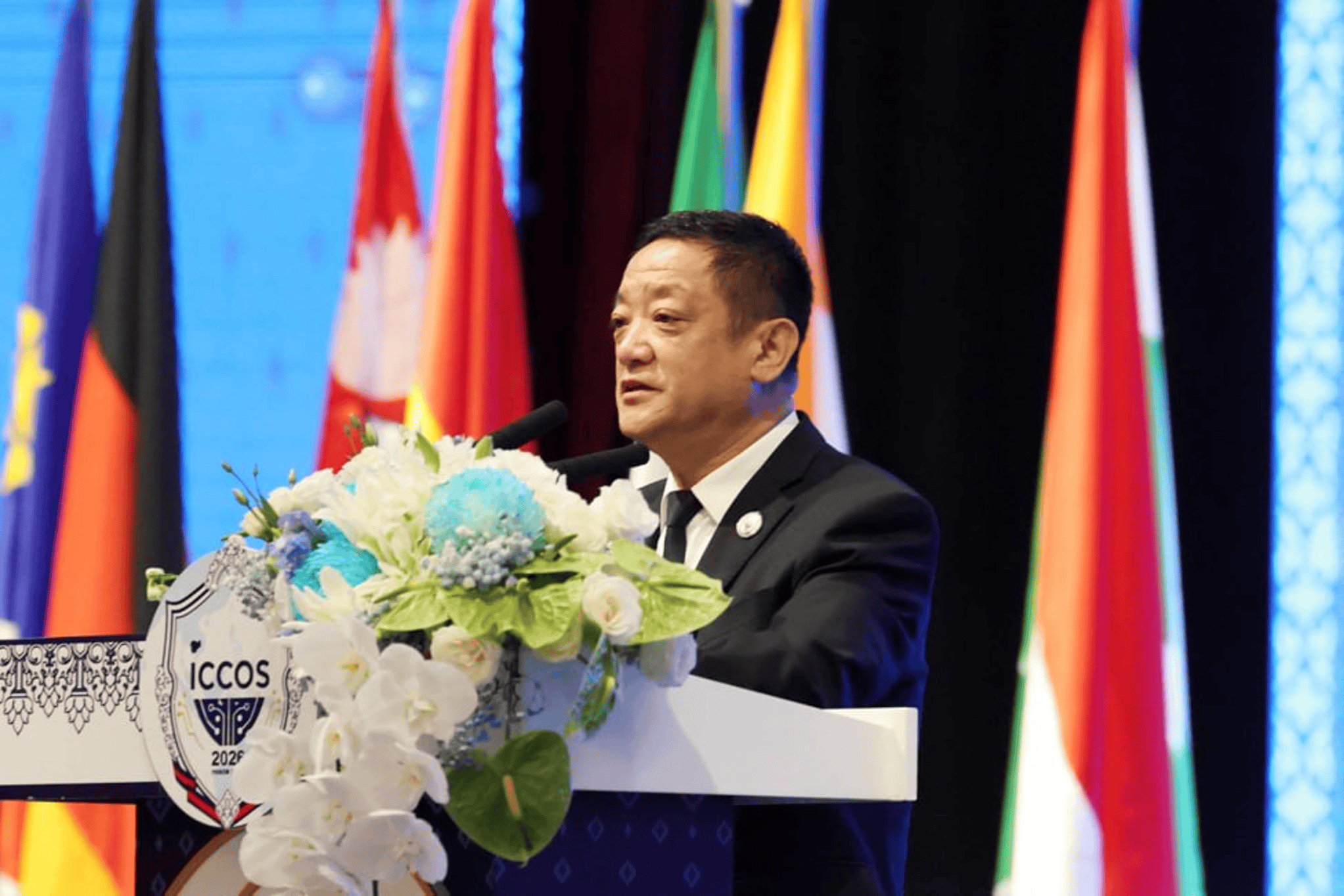
A senior Chinese security official has painted a mixed picture of the fight against telecom and online fraud, crediting regional cooperation with major wins while acknowledging that the threat remains far from eliminated.
Speaking at the International Conference on Combating Online Scams in Phnom Penh, Vice Minister of Public Security Yang Weilin said China ranks among the world's biggest victims of such fraud, with hundreds of thousands of people defrauded annually and losses running into tens of billions of yuan.
Yang said Beijing has pursued a two-pronged approach: intensifying enforcement at home to "eliminate the soil for crime," and leaning heavily on international partnerships to shut down scam operations abroad. He credited this strategy with marked improvements in the fraud landscape across Southeast Asia.
Major figures captured through cooperation
Yang highlighted several high-profile arrests made in coordination with Cambodia, describing the suspects as behind-the-scenes financiers and organisers of gambling and fraud schemes.
- Chen Zhi, founder of Prince Group, was arrested and extradited to China in January over "pig-butchering" scams and other illegal business activities. US authorities seized an estimated $14-15 billion in bitcoin tied to the operations.
- Li Xiong, former chairman of Cambodia-based financial conglomerate Huione Group, was arrested and extradited in April. The group has reportedly links to Prince Group.
- Liu Ren, who ran Jinbei Group as it shifted from online gambling into scam operations, was arrested and deported to China in June.
Yang also pointed to broader regional successes, including the dismantling of the so-called "Four Major Families" criminal networks in northern Myanmar through China-Myanmar cooperation, and the extradition of She Zhijiang with Thai police. China, he added, has worked with partners spanning Asia, Africa, Europe and the Americas, from the UAE and Vietnam to the US and Spain.
Acknowledging the limits of progress
Despite what he called remarkable results, Yang stressed that fraud has not been eradicated. Criminals continue to move across borders, illicit black and gray industries persist, and the overall picture remains complex.
He urged nations to cooperate rather than turn the issue into a political football. "We must never politicise the fight against transnational crime, still less engage in stigmatisation or confrontation," he said.
Yang also praised Cambodia's own efforts, noting stronger legislation, tougher enforcement, anti-corruption measures and deeper international cooperation. He said the country has cleared large-scale scam compounds and repatriated tens of thousands of fraud suspects, producing results "plain for the international community to see."