North Korea's Missile Tests Read as Political Messaging Before UN Assembly and Trump-Xi Talks
North Korea's launch of two short-range ballistic missiles is widely viewed as pressure on Washington ahead of the UN General Assembly and a Trump-Xi summit, signaling its rejection of denuclearization.
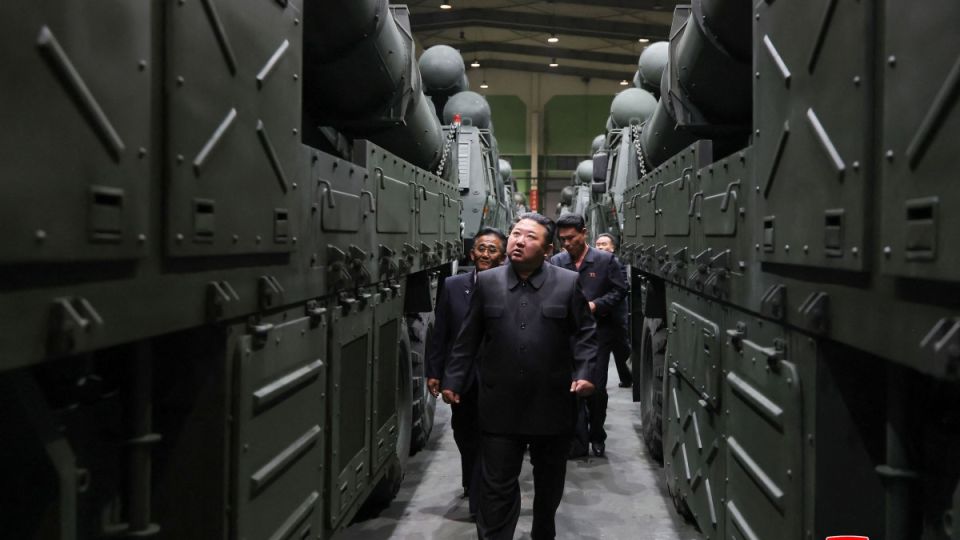
SEOUL – North Korea's latest round of missile tests appears designed to ratchet up pressure on Washington, arriving amid heightened speculation over a possible revival of talks between the two countries and just ahead of a series of key diplomatic events.
On Sunday, Pyongyang launched two short-range ballistic missiles from Wonsan out over the East Sea. According to South Korea's Joint Chiefs of Staff, the first was fired at roughly 3 p.m. and covered around 450 kilometers, while the second, launched near 5:50 p.m., traveled more than 600 km.
The moment chosen for the launches has drawn scrutiny, coming only days before the opening of the UN General Assembly in New York on Tuesday and a planned meeting between US President Donald Trump and Chinese President Xi Jinping.
A Stage for Diplomacy
South Korean President Lee Jae Myung is set to attend the UN gathering, where he is expected to lay out his government's approach to peace and coexistence on the Korean Peninsula. During last year's General Assembly, Lee introduced his "E.N.D. Initiative" — built around exchange, normalization and denuclearization — with early emphasis on curbing the growth of the North's nuclear and missile programs.
Against that backdrop, the missile tests may be seen as Pyongyang restating its refusal to accept denuclearization as a starting point for negotiations, while stressing that it wants to be recognized as a nuclear-armed state in any future dealings with the US.
The launches also precede Thursday's US-China summit, at which North Korea may once again surface as a topic between Trump and Xi. Following their earlier meeting in Beijing in May, China stayed silent on whether the North's nuclear program had come up, though Trump later said the two leaders had touched on the subject of denuclearization.
Pyongyang is likely to be especially wary of any sign that Beijing — its long-standing ally and biggest economic partner — still supports the wider aim of a nuclear-free peninsula.
Setting Terms for Possible Talks
Trump has voiced repeated interest in reopening dialogue with North Korean leader Kim Jong-un, fueling speculation that summit-level diplomacy between the two capitals could restart. Viewed through that lens, Sunday's tests may be an attempt by Pyongyang to define its preferred terms in advance — namely, that any negotiations should address matters other than surrendering its nuclear weapons.
"North Korea has repeatedly followed a pattern of launching missiles after criticizing South Korea-US and South Korea-US-Japan military exercises through statements by [the North Korean leader's sister] Kim Yo-jong and others," said Yang Moo-jin, a distinguished professor at the University of North Korean Studies.
"The choice to launch short-range missiles toward the East Sea appears intended to demonstrate its short-range strike capabilities against South Korea and US Forces Korea while putting pressure on Washington ahead of any potential US-North Korea dialogue," he added. "In terms of timing, it also appears aimed at signaling ahead of the UN General Assembly that denuclearization is not an option."
A Response to Military Drills
The launches followed two days after Kim Yo-jong condemned the US-led multinational Pacific Vanguard maritime exercises, warning that Pyongyang would respond in a manner that could be proportionate or stronger.
In recent weeks, North Korea has intensified its objections to large-scale military drills involving South Korea, the US and Japan. Its previous ballistic missile test on Sept. 12 came one day after the three nations wrapped up their trilateral Freedom Edge exercise.
State Media Stays Quiet
North Korean state media offered no coverage of Sunday's launches by Monday. The Korean Central News Agency made no reference to the two missiles, extending an increasingly erratic pattern in which Pyongyang sometimes declines to publicize its weapons tests. Three launches last month were left unreported, while the Sept. 12 test was announced two days afterward as part of a joint firepower drill involving artillery and missile units.
Questioned about the silence, Seoul's Unification Ministry spokesperson Yoon Min-ho said on Monday that the government would not read much into it. "There have been several instances in the past in which such launches were not reported, so we will not offer a separate assessment," Yoon said at a routine briefing.
The US military likewise downplayed any near-term danger from the tests while restating its defense pledges. "We are aware of the recent missile launches and are consulting closely with our allies and partners," US Pacific Command said in a statement posted to its website Sunday.
"Based on current assessments, these events do not pose an immediate threat to US personnel or territory, or to our allies. The United States remains committed to the defense of the US homeland and our allies in the region."
US Pacific Command has released similarly phrased responses to earlier North Korean launches this year, stopping short of explicitly condemning them.