Senate Member Ly Yong Phat Backs Government's Campaign Against Online Fraud
Cambodian businessman and Senate member Ly Yong Phat has pledged unconditional support for the government's crackdown on online scam operations, calling them a transnational threat to public safety and national reputation.
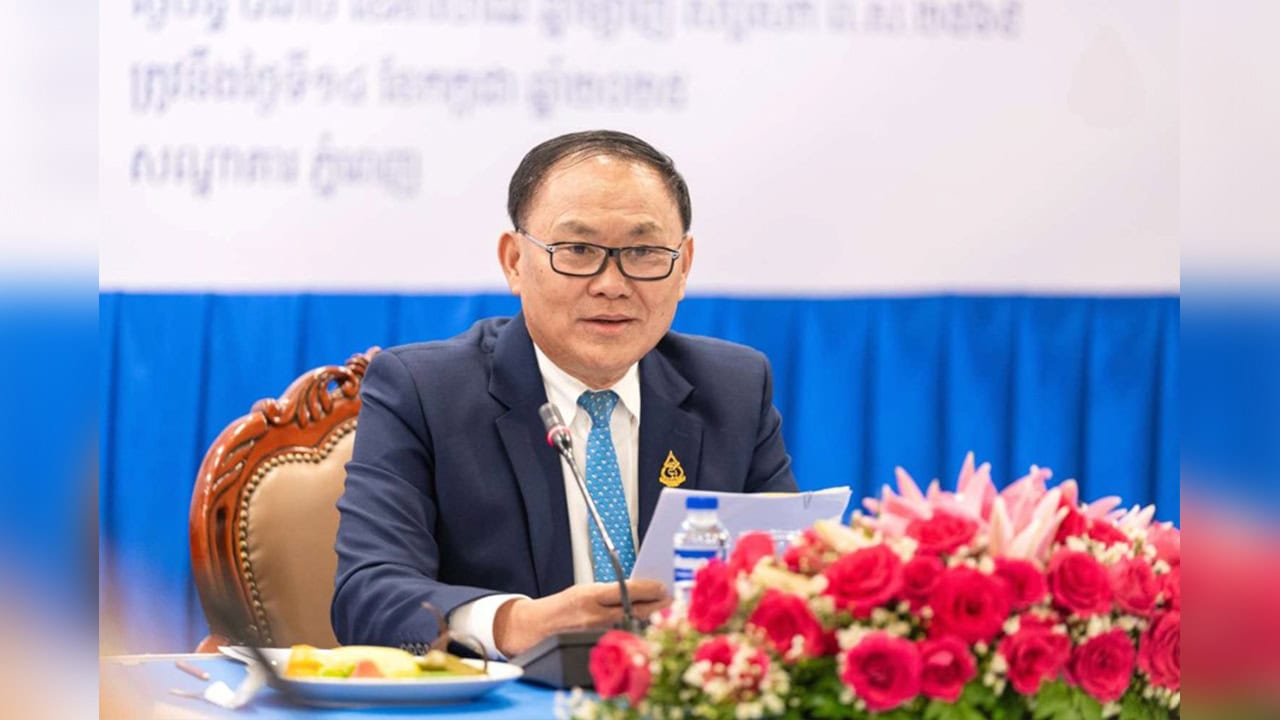
Ly Yong Phat, a member of Cambodia's Senate and well-known entrepreneur, has announced his unwavering commitment to the government's efforts to eliminate online fraud operations, calling technology-driven scams a grave cross-border threat that puts citizens, honest enterprises, and the nation's global standing at risk.
The businessman stated he supports without reservation the administration's policies and strong actions aimed at dismantling every site and organization conducting technology-based fraud within Cambodia's borders.
Adopting a firm stance of complete intolerance toward digital scam operations, Yong Phat voiced his backing for the two-day International Conference on Combating Online Scams that commenced in Phnom Penh on September 23, led by Prime Minister Hun Manet.
According to Yong Phat, these criminal activities pose dangers to the population, undermine the country's legitimate commercial sector, diminish confidence among investors, and tarnish Cambodia's image abroad.
Speaking as both a Cambodian entrepreneur and investor, he pledged his willingness to work alongside government bodies, law enforcement officials, and global allies to shield the public, preserve the nation's standing, and help build a corruption-free digital landscape.
His statement aligned with a key theme from Manet's conference opening remarks: that investors, landlords, hiring agents, and other commercial participants must actively prevent criminal groups from misusing lawful business frameworks.
"Cambodia will never serve as a sanctuary for online scam operations," the prime minister declared. "Cambodia will not permit criminal organizations to threaten our nation's advancement and the well-being of more than 17 million Cambodians."
Manet emphasized that this form of crime did not start in Cambodia and extends beyond the Kingdom's borders.
"Responsibility must be demonstrated through decisive internal measures," Manet stated.
He outlined that contemporary anti-scam laws must address complete criminal operations, including those who lead them, finance them, recruit for them, provide property, and others who deliberately facilitate their work.
The government formed the Commission on Combating Online Scams under Manet's direct oversight in February 2025, followed by passage of the Law on Combating Online Scams in April 2026.
"We approach law enforcement as an ongoing national security duty, not a publicity effort," the prime minister said.
He reported that authorities have shut down all major scam facilities across Cambodia, though he cautioned that criminal syndicates are now trying to reorganize into smaller, scattered units.
Yong Phat's public declaration holds particular weight given past denials of Thai media claims connecting him and his enterprises to purported cybercrime and financial laundering schemes.
In a November 2025 interview, he refuted reports suggesting Thai officials had searched 36 properties and seized assets valued at 400 million baht, roughly $12.3 million, supposedly tied to online fraud rings.
He clarified that he had run lawful casino operations for over twenty years and leased certain facilities to outside parties after closing those businesses during the Covid-19 crisis.
"I do not run scam operations. I established my company through my own efforts, and I have consistently supported Cambodia's development," he stated.