Shared Culture, Separate Histories: An Open Letter to the People of Thailand
A Cambodian citizen writes an open letter urging Thailand to judge cultural heritage by historical evidence rather than modern borders, pointing to the many ancient Khmer monuments preserved within Thailand itself.
Dear people of Thailand,
I write to you openly and respectfully as a Cambodian citizen with a simple question in mind.
Every time a photograph surfaces and someone in Thailand immediately claims that Cambodia has “stolen” it, I find myself asking one thing: where is the evidence?
If Thailand wants the world to judge photographs, dress, customs, sculptures, historical figures and cultural heritage by evidence, then Cambodia has every right to hold Thailand to that same standard when it comes to its own historical record.
So let us consider a much larger question.
Ancient Khmer Heritage Within Thailand
How many ancient Khmer monuments and archaeological sites actually lie inside present-day Thailand?
The answer is not one or two. They are spread across many provinces, particularly in the northeastern region and parts of the east. Documented examples include Buriram, Surin, Sisaket, Nakhon Ratchasima, Sa Kaeo and others.
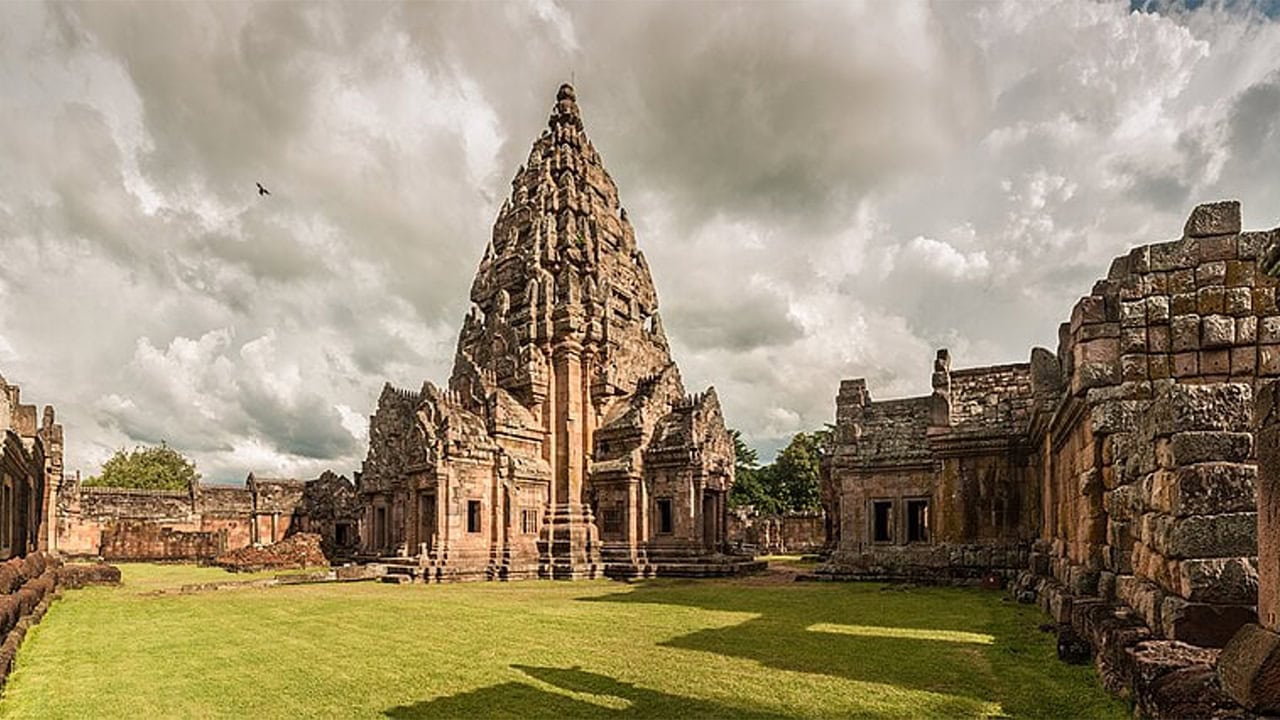
Thailand’s own official tourism materials describe Phanom Rung in Buriram as a monument of important Khmer artistry, while Prasat Muang Tam and Phimai are highlighted among significant historical sites. Thai archaeological authorities likewise record ancient Khmer remains in places such as Sa Kaeo, where the evidence documents the influence of ancient Khmer culture.
Published inventories devoted specifically to ancient Khmer sites in northeastern and eastern Thailand also exist, which shows that this is not something invented by Cambodians on social media.
Judge by Evidence, Not by Borders
So when someone points to a single photograph and declares that Cambodia stole it from Thailand, I ask them to stop and reflect.
What historical evidence backs that claim?
A photograph is not an archaeological dig. A social-media post is not an inscription. A modern national border does not prove the original origins of an ancient monument. And the mere presence of an ancient Khmer monument inside Thailand today does not erase the civilization that built it.
Look at Phanom Rung. Look at Muang Tam. Look at Phimai. Look at the Khmer monuments of Surin. Look at the Khmer archaeological remains of Sisaket. Look at the Khmer-period heritage throughout Buriram and other parts of northeast Thailand.
Then ask yourself honestly: who created these monuments, and when were they built? What language do their inscriptions carry? Which religious traditions do they reflect? What architectural style do they belong to? What do contemporary archaeological records say?
These are historical questions that cannot be answered simply by looking at today’s political borders.
And to those who repeatedly accuse Cambodia of taking Thai culture, I say this directly: before accusing Cambodia, study the history of the land on which you are standing.
I am not claiming that every modern Thai person is Cambodian. I am not saying that every tradition found in Thailand belongs exclusively to Cambodia. I am saying something far simpler: ancient Khmer heritage exists inside Thailand today, and that fact deserves honest acknowledgment.
The history of mainland Southeast Asia is complicated. Kingdoms expanded and contracted. Populations moved. Languages and religions changed. Cultures influenced one another. Modern Cambodia and modern Thailand did not have their present borders during the periods when many of these monuments were built.
For that reason, neither side should rewrite ancient history merely to serve modern nationalism.
A Question for the Culture Ministry
But there is a particularly important question for Thailand’s culture ministry. If Cambodia is repeatedly asked to prove the historical origins of its cultural heritage, why should the same rigorous standard not apply when discussing ancient Khmer heritage located within Thailand?
I challenge anyone who says Cambodia “stole everything” to present the evidence.
Not insults. Not memes. Not nationalist slogans. Evidence.
Bring the inscriptions. Bring the archaeological reports. Bring the excavation records. Bring the historical maps. Bring the dates. Bring the scholarly research. And let independent historians and archaeologists examine it all.
That is how serious history should be discussed.
A Call for Honesty and Peace
I am a Cambodian citizen, and I bear no ill will toward ordinary Thai people. What I oppose is historical double standards.
I want peace between Cambodians and Thais. But peace does not mean silence. Friendship does not mean forgetting. And respect does not mean letting social-media accusations replace historical evidence.
So to the people of Thailand, the Thai Government, and the Thai Ministry of Culture, I respectfully ask: if a single photograph is enough to accuse Cambodia of stealing Thai heritage, then what should we say when thousands of archaeological records and numerous ancient Khmer monuments are preserved within present-day Thailand?
Who will dare to tell the world about that history?
I will.
Not because I hate Thailand or Thai people. But because I am a Cambodian citizen who believes that history should be confronted with evidence, wherever that evidence leads.
Let the evidence speak. Let archaeology speak. Let inscriptions speak. Let history speak. And let Cambodians and Thais face the truth of our shared past without hatred.